
Are Web Directories Still Relevant for SEO in 2026?

The Evolution of Web Directories in Modern SEO
Web directories were once a cornerstone of early search engine optimization. In the late 1990s and early 2000s, submitting a website to dozens or even hundreds of directories was considered a valid strategy to improve rankings. At that time, search engines relied heavily on link quantity as a ranking factor, and directory listings were an easy way to accumulate backlinks.
However, the landscape changed dramatically as search algorithms became more sophisticated. Updates targeting spammy link practices reduced the impact of low-quality directory submissions. By the mid-2010s, many marketers declared directories obsolete. In 2026, the reality is more nuanced. Web directories are no longer a volume-based tactic, but they can still provide value when used strategically and selectively.
Today, relevance, authority, and trust are the core metrics that determine whether a directory listing contributes positively to SEO. A carefully chosen listing in a respected, niche-specific directory can support visibility, referral traffic, and brand credibility. On the other hand, mass submissions to generic directories can dilute link quality and potentially harm a site's backlink profile.
How Search Engines Like Google Evaluate Directory Links in 2026
Search engines such as Google no longer treat all backlinks equally. Instead, they assess multiple signals to determine the legitimacy and value of a link. Directory links are evaluated through the same lens as any other backlink.
In 2026, the following criteria are especially important when assessing directory links:
- Topical relevance - Is the directory aligned with the website’s industry or niche?
- Editorial review - Does the directory manually review submissions, or is it fully automated?
- Authority and trust signals - Does the directory itself have strong organic visibility and a clean backlink profile?
- User value - Do real users browse and interact with the directory?
- Link context - Is the listing descriptive and meaningful, or just a name and URL?
Search engines have become highly effective at identifying patterns associated with manipulative link building. Large clusters of low-quality directory links created within a short timeframe can trigger algorithmic devaluation. In contrast, a limited number of well-placed listings built gradually and organically are unlikely to raise red flags.
It is also important to understand that most directory links today are either nofollow or carry limited direct ranking power. That does not automatically make them useless. Even a nofollow link can drive qualified referral traffic, improve brand visibility, and contribute to a natural-looking link profile.
High-Quality vs. Low-Quality Directories: What Still Works?
Not all directories are created equal. In 2026, the difference between a beneficial listing and a harmful one often comes down to quality control, relevance, and user experience.
The table below highlights the key differences between high-quality and low-quality directories to help you evaluate opportunities more effectively:
| Criteria | High-Quality Directory | Low-Quality Directory |
|---|---|---|
| Submission Process | Manual review with clear guidelines | Instant approval with no review |
| Relevance | Industry-specific or well-categorized | Overly broad with poor categorization |
| User Experience | Clean design, useful descriptions | Spammy layout with excessive ads |
| Outbound Links | Selective and curated | Thousands of unrelated links |
| Traffic | Receives organic traffic | No visible traffic or engagement |
A high-quality directory functions more like a curated resource than a link farm. It provides real value to users searching for companies, services, or information within a specific sector. Examples include professional associations, reputable business listings, and specialized industry platforms.
Low-quality directories, on the other hand, often exist solely to sell backlinks. They typically feature thin content, minimal editorial oversight, and thousands of unrelated listings. Submitting to such directories may offer short-term link acquisition but can undermine long-term SEO health.
When evaluating a directory, ask yourself: Would I still want to be listed here if search engines did not exist? If the answer is no, it is probably not worth pursuing.
The Role of Niche and Local Directories in Topical Authority
One of the most relevant uses of web directories in 2026 is in building topical authority and local visibility. Search engines increasingly prioritize context and subject-matter expertise. Being listed in reputable niche directories reinforces a website’s association with a specific industry.
For example, a cybersecurity consultancy listed in respected IT and security directories sends consistent relevance signals. Similarly, a local plumbing company listed in regional business directories strengthens its local SEO footprint.
Niche and local directories contribute in several practical ways:
- They reinforce industry alignment through contextual categorization.
- They improve local citation consistency, especially when name, address, and phone number are standardized.
- They can generate targeted referral traffic from users actively searching within that directory.
- They diversify the backlink profile with contextually relevant sources.
For local businesses, citation accuracy remains critical. Inconsistent business information across directories can confuse both users and search engines. Ensuring that contact details are identical across platforms helps maintain trust and clarity.
For niche websites, carefully selected listings can complement content marketing efforts. When combined with authoritative blog posts, case studies, and industry partnerships, directory listings act as supporting signals rather than primary ranking drivers.
Strategic Use of Web Directories Within a Broader Link-Building Strategy
In 2026, web directories should not be viewed as a standalone SEO tactic. Instead, they should be integrated into a broader, diversified link-building strategy focused on quality and sustainability.
A practical approach to using directories strategically includes the following steps:
- Audit your current backlink profile to identify existing directory links and remove or disavow harmful ones if necessary.
- Select a limited number of relevant directories based on niche alignment, authority, and traffic indicators.
- Create optimized, descriptive listings that clearly explain your services rather than relying on generic anchor text.
- Monitor referral traffic and indexing to assess whether the listing provides measurable value.
- Combine directory listings with other link-building efforts such as guest posting, digital PR, partnerships, and high-quality content creation.
It is essential to maintain balance. If directory links represent a disproportionate percentage of your backlink profile, it may signal an outdated or manipulative approach. A healthy profile in 2026 typically includes editorial mentions, brand citations, industry collaborations, and natural links earned through valuable content.
Additionally, directories can support branding objectives beyond SEO. A well-written listing can function as a micro landing page that reinforces positioning, communicates expertise, and directs qualified prospects to your website.
Ultimately, the relevance of web directories in 2026 depends on how they are used. Mass submission is obsolete, but carefully curated, relevant listings can still contribute to authority, visibility, and trust when integrated thoughtfully into a comprehensive SEO strategy.
Ready to showcase your project?
Join thousands of developers and entrepreneurs who have already listed their websites in our directory. Get discovered by potential users and grow your audience.
Free to list • Instant approval • No hidden fees
Frequently Asked Questions
Are web directories still useful for SEO in 2026?
Do links from directories still affect Google rankings?
Related articles

What Makes a High-Quality Backlink in 2026?
In 2026, backlinks are no longer about volume but about relevance, trust, context, and real traffic impact. This guide breaks down the key criteria that define a truly high-quality backlink today - from editorial placement and semantic alignment to brand authority and engagement signals - with practical insights you can apply immediately.
How Many Backlinks Do You Really Need to Rank on Google?
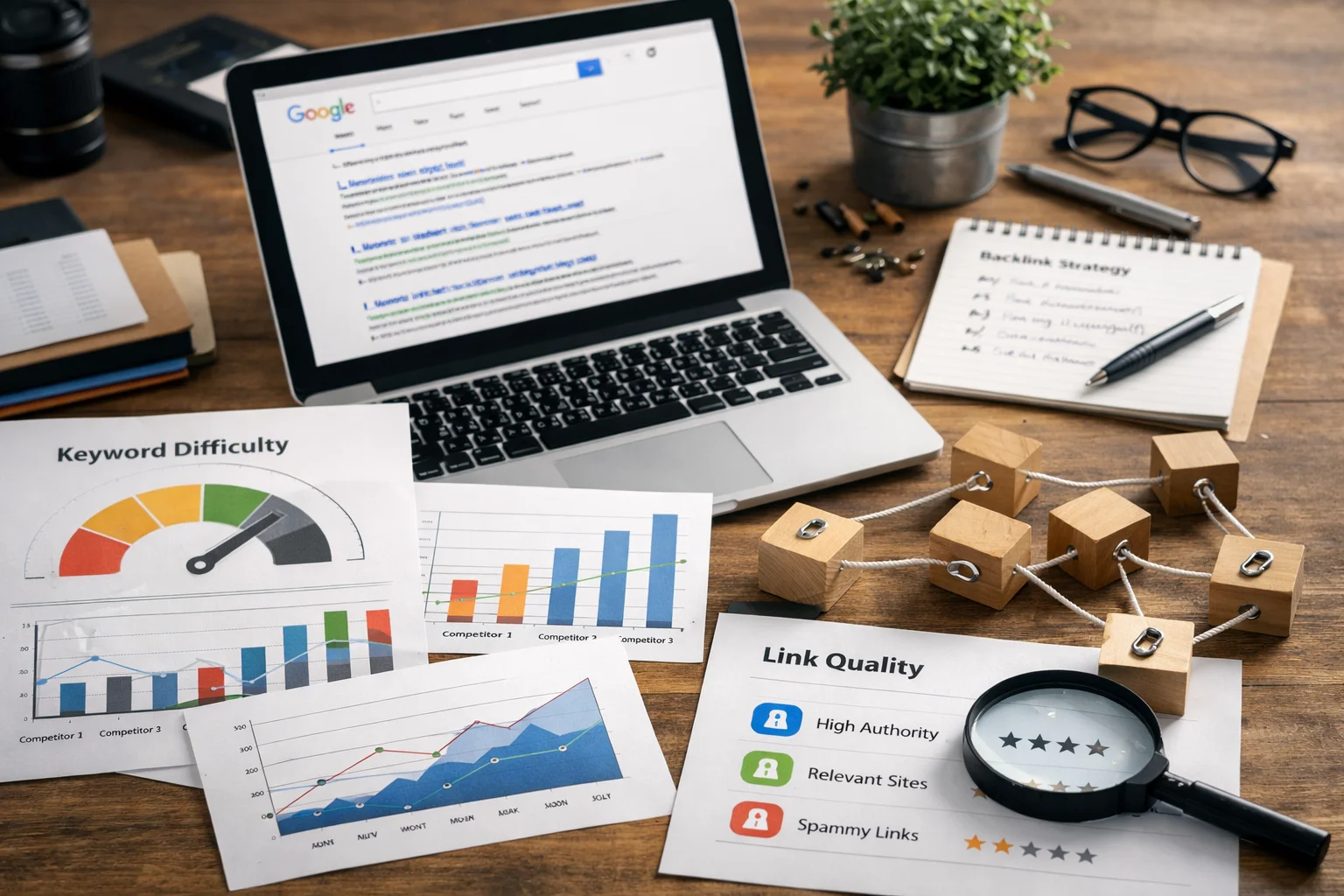
Backlinks remain one of the most important ranking factors in SEO, but there is no universal number that guarantees success. This guide explains how many backlinks you actually need based on competition, keyword difficulty, and link quality - with practical insights to build a strategy that drives long-term rankings.

Reverse Engineering Competitor Backlink Strategies for Scalable SEO Growth
Discover how to analyze competitor backlinks to uncover high-value link sources, anchor strategies, PR patterns, and link gaps. This guide shows you how to turn competitor data into a structured, repeatable, and scalable link acquisition system driven by real SEO signals instead of guesswork.