
How Many Backlinks Do You Really Need to Rank on Google?
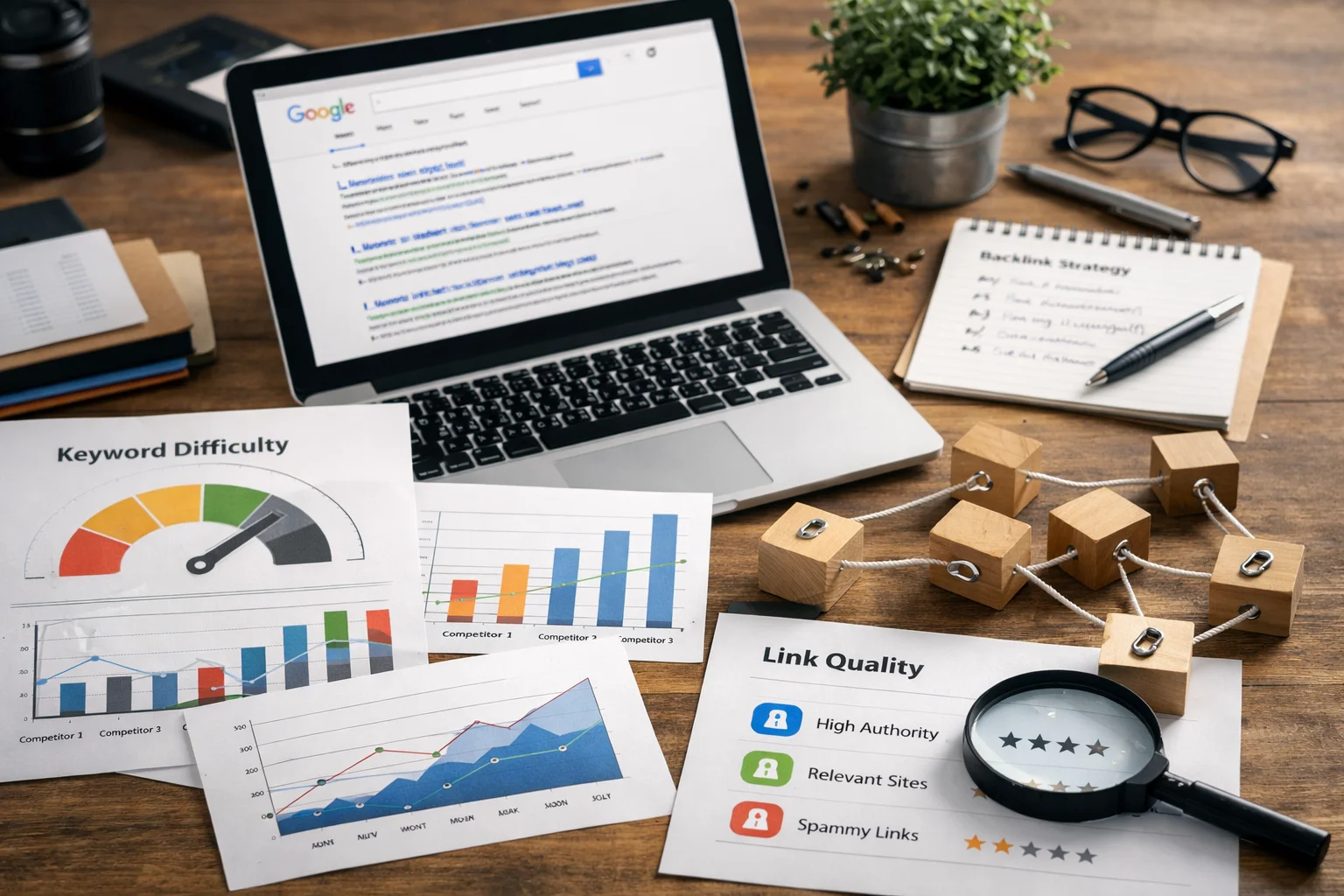
Understanding How Backlinks Influence Google’s Ranking Algorithm
Backlinks remain one of the strongest signals in search engine optimization because they act as external validations of your content. When another website links to your page, it sends a signal to search engines that your content is valuable, relevant, or authoritative. In competitive search results, this signal often becomes a decisive factor.
Search engines evaluate backlinks through multiple dimensions. It is not simply about counting links. Instead, algorithms assess authority, relevance, trust, and context. A single link from a well-established industry publication can outweigh dozens of low-quality links from unrelated websites.
The influence of backlinks can be broken down into several core elements:
- Domain authority - Links from strong domains pass more ranking power.
- Topical relevance - A backlink from a website in your niche carries more contextual weight.
- Anchor text - The clickable text helps search engines understand what your page is about.
- Placement - Editorial links within content are more valuable than footer or sidebar links.
- Link velocity - A natural growth pattern is safer and more sustainable than sudden spikes.
In practice, this means that asking "How many backlinks do you need?" is incomplete. The better question is: How many high-quality, relevant backlinks do you need to compete in your specific search landscape?
Quality vs. Quantity: What Really Matters for SEO Performance?
Many website owners assume they need hundreds or thousands of backlinks to rank. In reality, quality almost always outweighs quantity. A small portfolio of authoritative links can outperform a massive profile built on weak domains.
Consider two hypothetical pages targeting the same keyword:
| Page | Number of Backlinks | Average Domain Authority | Topical Relevance |
|---|---|---|---|
| Page A | 250 | Low to Medium | Mixed |
| Page B | 35 | High | Strongly Relevant |
In most real-world cases, Page B would have a stronger chance of ranking higher because search engines prioritize trust and relevance over raw volume.
However, quantity does play a role in competitive niches. Once you meet a baseline level of quality, additional authoritative links can create a cumulative effect. This is especially true for keywords where top-ranking pages already have robust backlink profiles.
To determine whether you need more links or better links, you should evaluate:
- The authority gap between your domain and the top-ranking competitors
- The average number of referring domains in the top 10 results
- The consistency of your backlink growth over time
- Whether your links come from unique domains or repeated sources
It is generally more strategic to focus on acquiring referring domains rather than increasing total link count from the same websites.
How Many Backlinks Do Top-Ranking Pages Actually Have?
There is no universal number that guarantees rankings. The number of backlinks required varies significantly depending on the keyword, industry, and search intent. A local service keyword might rank with fewer than 20 strong referring domains, while a national finance keyword might require hundreds.
To estimate how many backlinks you need, follow a structured competitive analysis process:
- Identify the top 5 to 10 pages ranking for your target keyword.
- Analyze their number of referring domains, not just total backlinks.
- Calculate the average and median values.
- Evaluate the authority and relevance of those domains.
- Compare those metrics with your current backlink profile.
For example, if the average number of referring domains among the top 5 results is 60, and your page has 15, you likely need to close that gap. However, if your domain authority is significantly stronger, you may need fewer links than competitors.
It is also important to distinguish between homepage authority and page-level authority. In many cases, individual pages rank because they accumulate backlinks directly, not just because the domain is strong overall.
A practical rule of thumb is this: aim to reach at least the median number of referring domains in the top 10 results, then focus on exceeding it with high-quality placements.
Industry Competition and Keyword Difficulty: Why the Number Varies
The backlink requirement changes dramatically depending on competition level. Keyword difficulty tools attempt to estimate how hard it is to rank, and backlinks are a major component of that calculation.
Industries like finance, insurance, SaaS, and health are typically more competitive because:
- They generate high revenue per customer
- Large brands actively invest in SEO
- Authoritative publishers dominate the search results
In these sectors, it is common for top-ranking pages to have hundreds of referring domains. In contrast, local businesses or niche B2B services may achieve first-page rankings with significantly fewer backlinks if the content quality and search intent alignment are strong.
Search intent also plays a key role. Informational keywords sometimes require fewer backlinks if your content is exceptionally comprehensive and well-structured. Commercial keywords, on the other hand, often demand stronger authority signals.
Before launching a link-building campaign, you should classify your keyword into one of these simplified categories:
- Low competition - Emerging topics, local searches, niche long-tail keywords
- Medium competition - Established informational queries with moderate authority sites
- High competition - Transactional keywords dominated by large brands
The higher the competition, the more backlinks you will typically need, but the emphasis should always remain on earning links that match or exceed the authority of current competitors.
Building a Sustainable Backlink Strategy for Long-Term Rankings
Rather than chasing a specific number, focus on building a consistent and sustainable backlink acquisition strategy. Long-term rankings depend on steady authority growth, not short-term spikes.
A practical backlink strategy should include multiple acquisition methods:
- Publishing data-driven or original research content that attracts citations
- Guest posting on relevant industry websites
- Digital PR campaigns targeting journalists and bloggers
- Strategic partnerships and collaborations
- Creating linkable assets such as tools, templates, or in-depth guides
Consistency is critical. Search engines evaluate natural growth patterns. A sudden influx of hundreds of links followed by inactivity can appear manipulative, whereas gradual growth reinforces credibility.
It is also essential to monitor and maintain your backlink profile. This includes:
- Auditing toxic or spammy links
- Reclaiming broken backlinks
- Updating outdated content to retain earned links
- Strengthening internal linking to distribute authority
Ultimately, the question is not simply "How many backlinks do you need?" but rather how effectively your backlinks position you against competitors in your niche. A focused strategy built on relevance, authority, and consistency will outperform any arbitrary numerical target.
Ready to showcase your project?
Join thousands of developers and entrepreneurs who have already listed their websites in our directory. Get discovered by potential users and grow your audience.
Free to list • Instant approval • No hidden fees
Frequently Asked Questions
How many backlinks do I need to rank on Google?
Should I focus on total backlinks or referring domains?
Related articles

What Makes a High-Quality Backlink in 2026?
In 2026, backlinks are no longer about volume but about relevance, trust, context, and real traffic impact. This guide breaks down the key criteria that define a truly high-quality backlink today - from editorial placement and semantic alignment to brand authority and engagement signals - with practical insights you can apply immediately.

Reverse Engineering Competitor Backlink Strategies for Scalable SEO Growth
Discover how to analyze competitor backlinks to uncover high-value link sources, anchor strategies, PR patterns, and link gaps. This guide shows you how to turn competitor data into a structured, repeatable, and scalable link acquisition system driven by real SEO signals instead of guesswork.

Are Web Directories Still Relevant for SEO in 2026?
In 2026, web directories are no longer a mass link-building shortcut, but they are not completely obsolete either. This article explores whether directory listings still influence rankings, how search engines evaluate them today, and how to use niche and local directories strategically within a modern, sustainable SEO strategy.