
What Is Domain Rating and How Is It Calculated?
Understanding Domain Rating: Definition and Purpose
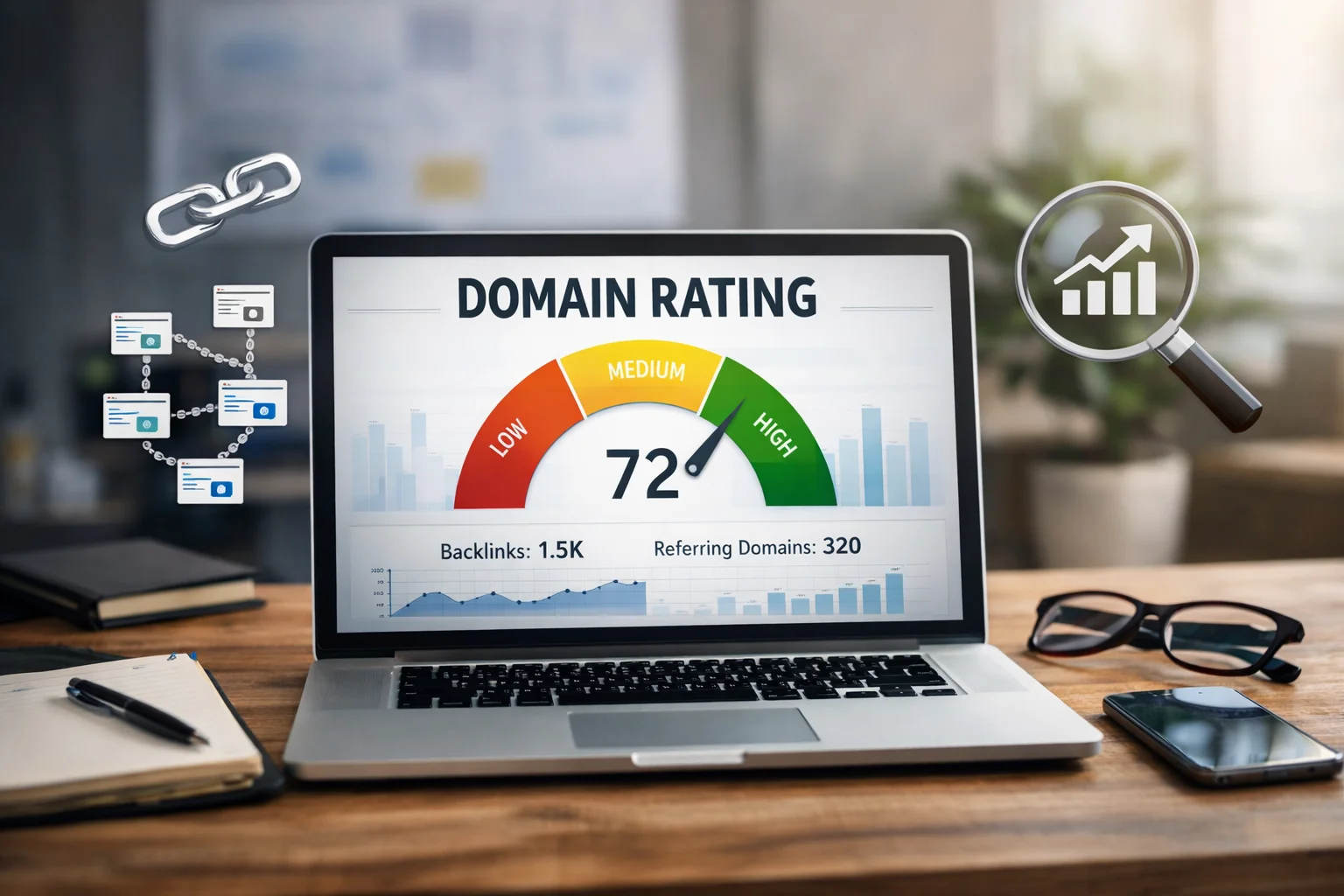
Domain Rating (DR) is a metric developed by Ahrefs that measures the strength of a website’s backlink profile on a logarithmic scale from 0 to 100. It is designed to estimate how authoritative a domain appears based on the quantity and quality of links pointing to it. The higher the score, the stronger the backlink profile is considered to be.
It is important to understand that Domain Rating does not directly measure traffic, content quality, or on-page optimization. Instead, it focuses specifically on link authority. In practical SEO terms, DR helps you quickly evaluate how competitive a domain might be in organic search results compared to others in the same niche.
Because the scale is logarithmic, increasing your DR becomes progressively more difficult as your score rises. Moving from DR 10 to 20 is far easier than moving from 70 to 80. This structure reflects the reality of link building: gaining authority at higher levels requires significantly stronger backlinks.
Domain Rating is primarily used for:
- Evaluating the authority of competitor websites
- Assessing potential link-building opportunities
- Benchmarking your site’s backlink growth over time
- Filtering prospects for outreach campaigns
While DR is not a Google ranking factor, it is a useful comparative SEO metric that helps professionals estimate the relative strength of domains within a market.
How Domain Rating Is Calculated by Ahrefs
The calculation of Domain Rating is based on a sophisticated analysis of backlink data collected by Ahrefs’ crawler. Although the full algorithm is proprietary, its core principles are publicly explained by the company.
At a high level, the calculation considers the following key elements:
- The number of unique domains linking to your website
- The Domain Rating of those referring domains
- The number of websites each referring domain links to
- Whether links are dofollow or nofollow
The process works similarly to a “voting” system. Each referring domain passes a portion of its authority to the sites it links to. However, this authority is diluted depending on how many other domains it links out to. For example, a DR 80 site linking to only 5 domains passes more value per link than a DR 80 site linking to 500 domains.
To simplify the mechanism, the calculation can be described in these steps:
- Ahrefs identifies all unique referring domains pointing to your site.
- It evaluates the DR of each referring domain.
- It distributes authority proportionally based on outbound linking patterns.
- It aggregates this data and converts it into a logarithmic score between 0 and 100.
Only dofollow links are considered in the calculation of Domain Rating. Nofollow links may bring traffic or brand exposure, but they do not directly influence DR.
Another important point is that multiple links from the same domain typically count as one referring domain. Therefore, gaining links from 100 different websites is far more impactful than receiving 100 links from a single site.
The Role of Backlinks in Determining Domain Rating
Backlinks are the foundation of Domain Rating. However, not all backlinks contribute equally. The authority, relevance, and linking behavior of referring domains all play a crucial role in shaping your DR score.
High-quality backlinks typically come from domains that:
- Have a high Domain Rating themselves
- Link to a limited number of external sites
- Are contextually relevant to your industry
- Maintain editorial standards
For example, a contextual link from a well-established industry publication will contribute significantly more to your DR than a sidebar link from a low-authority blog directory.
It is also essential to understand that link diversity matters more than raw volume. If your link profile is built primarily from one type of source, such as web directories or forum profiles, your DR growth will likely stagnate. On the other hand, acquiring backlinks from news sites, blogs, SaaS platforms, educational domains, and niche websites signals a broader level of trust.
Additionally, DR is influenced by the overall strength of the Ahrefs index. As more websites gain backlinks and increase their authority, maintaining or improving your DR becomes more competitive. This is why Domain Rating can sometimes decrease even if you do not lose backlinks - the ecosystem around you has grown stronger.
Domain Rating vs. Other SEO Authority Metrics
Domain Rating is not the only authority metric used in SEO. Other popular tools offer similar scores, each based on their own proprietary methodology. Understanding these differences helps avoid confusion when comparing metrics.
The table below summarizes how Domain Rating compares with other well-known authority indicators:
| Metric | Provider | Main Focus | Scale |
|---|---|---|---|
| Domain Rating (DR) | Ahrefs | Backlink strength of entire domain | 0 - 100 (logarithmic) |
| Domain Authority (DA) | Moz | Ranking potential prediction | 0 - 100 (logarithmic) |
| Trust Flow | Majestic | Quality and trustworthiness of backlinks | 0 - 100 |
Although these metrics are conceptually similar, their databases and algorithms differ. A website with DR 60 may not necessarily have DA 60. Therefore, it is best practice to use these scores as relative indicators within the same tool rather than cross-comparing them directly.
It is also critical to remember that none of these metrics are official Google metrics. Google does not publicly provide a domain authority score. These tools simply attempt to model link authority based on their own crawlers.
How to Improve Your Domain Rating Strategically
Improving Domain Rating requires a long-term link-building strategy. Because DR is based primarily on referring domains and their authority, your focus should be on acquiring high-quality, relevant backlinks rather than chasing large volumes of low-value links.
Here are practical strategies to improve your DR:
- Create link-worthy content such as data studies, in-depth guides, or industry statistics that naturally attract references.
- Conduct targeted outreach to relevant blogs and publishers in your niche.
- Secure guest posting opportunities on authoritative websites.
- Reclaim lost backlinks by monitoring broken links pointing to your domain.
- Analyze competitors’ backlinks using Ahrefs and replicate high-quality opportunities.
When implementing these tactics, prioritize quality over speed. A single backlink from a DR 80 domain can have more impact than dozens from DR 20 websites.
You should also evaluate potential linking sites before outreach. Ask yourself:
- Does this website have genuine traffic?
- Is the content editorial and trustworthy?
- Does it link to hundreds of unrelated domains?
- Is the link placement contextual and natural?
Finally, track your progress regularly within Ahrefs. Monitor not only your DR but also:
- Growth in referring domains
- Distribution of link authority
- New versus lost backlinks
- Anchor text diversity
By focusing on sustainable link acquisition and maintaining a clean backlink profile, you can steadily increase your Domain Rating and strengthen your overall SEO foundation. Remember that DR is a comparative metric - consistent improvement and strategic positioning within your niche are more important than chasing an arbitrary number.
Ready to showcase your project?
Join thousands of developers and entrepreneurs who have already listed their websites in our directory. Get discovered by potential users and grow your audience.
Free to list • Instant approval • No hidden fees
Related articles

How to Optimize Your Project Pages for Faster Google Indexing
Boost your project pages’ visibility by speeding up Google indexing. Learn actionable strategies from URL optimization to structured data, internal linking, and content tips for faster search engine recognition.
Quick Fixes for Google Indexing Errors
Struggling with Google indexing errors? This guide explores quick and practical fixes to help your pages appear in search results faster. Learn how to resolve common issues like “Crawled – Not Indexed,” blocked URLs, and duplicate content while ensuring your site remains fully optimized for long-term SEO success.

SEO Trends to Watch in 2025 for Startups
Discover the key SEO trends shaping 2025 and learn how startups can adapt to stay competitive. From AI-powered search and voice optimization to EEAT and zero-click results, this guide explores practical strategies to boost online visibility and long-term growth.

The Impact of Core Web Vitals on Rankings and Conversions
Core Web Vitals are key performance metrics that Google uses to measure user experience. They influence not only search engine rankings but also how visitors interact with your website. A fast, stable, and responsive site improves visibility, boosts engagement, and increases conversions. Understanding and optimizing these metrics is essential for businesses looking to grow online.

Local SEO for Small Projects: A Practical Guide
Local SEO is essential for small projects aiming to attract nearby customers. This guide covers practical strategies—from Google Business optimization and keyword research to managing reviews and local links—to help your business get noticed locally and grow effectively.

SEO Myths That Are Holding Back Your Project
Many businesses waste time on outdated SEO advice. From overvaluing keywords to chasing low-quality links, myths can stall your growth. This post debunks common SEO misconceptions and shows what strategies truly drive results.
On-Page vs Off-Page SEO: A Beginner’s Guide
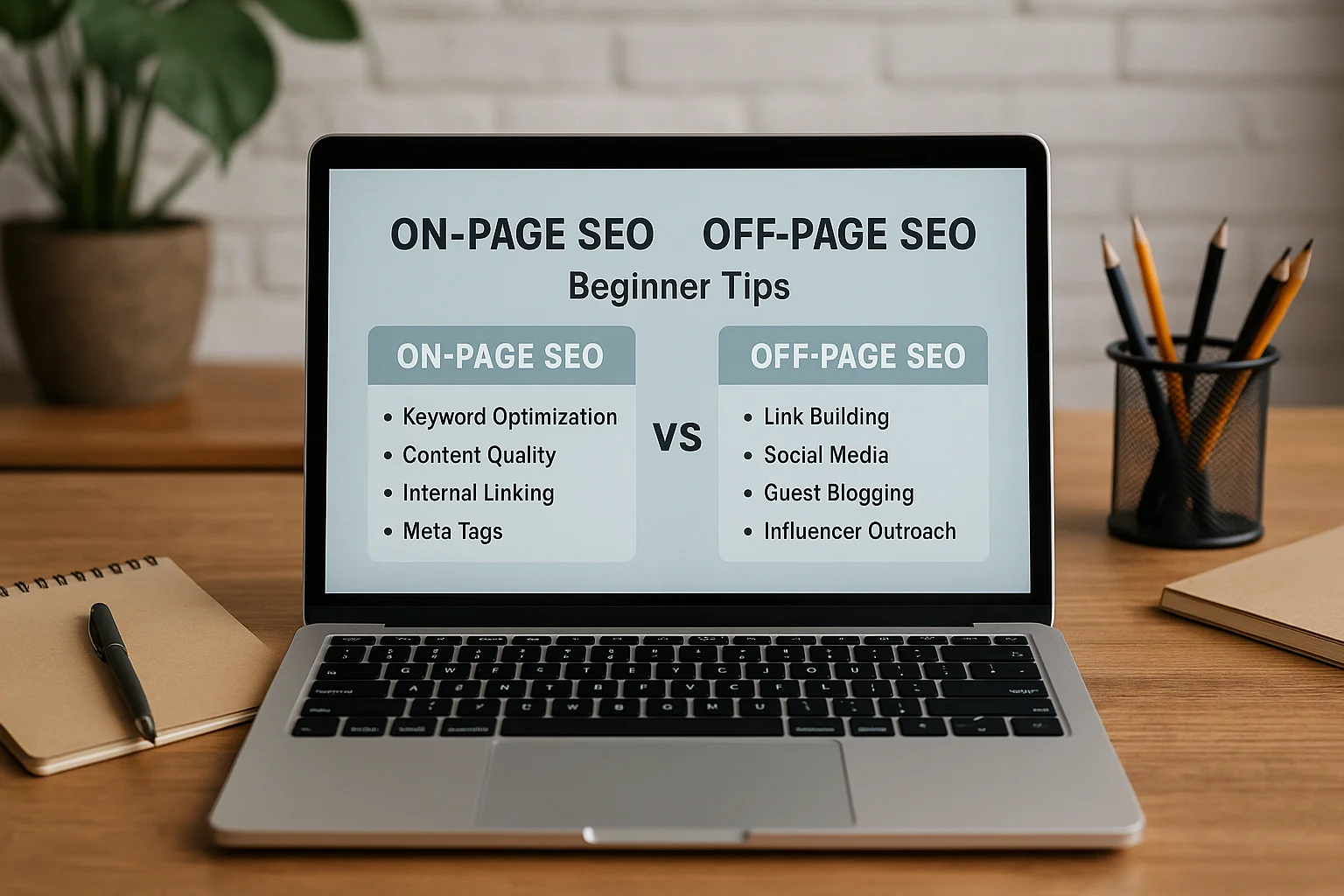
SEO can be confusing for beginners, but understanding the difference between On-Page and Off-Page SEO is essential. On-Page SEO focuses on optimizing your website’s content and structure, while Off-Page SEO builds authority through backlinks and online presence. This guide breaks down the basics to help you start improving your site’s search rankings today.

The Importance of Site Speed for SEO and User Experience
Site speed is a critical factor for both search engine rankings and user experience. Slow-loading pages frustrate visitors, increase bounce rates, and hurt conversions. This article explores why speed matters, how it affects SEO, and practical tips to make your website faster.
How to Perform a Simple SEO Audit for Your Website
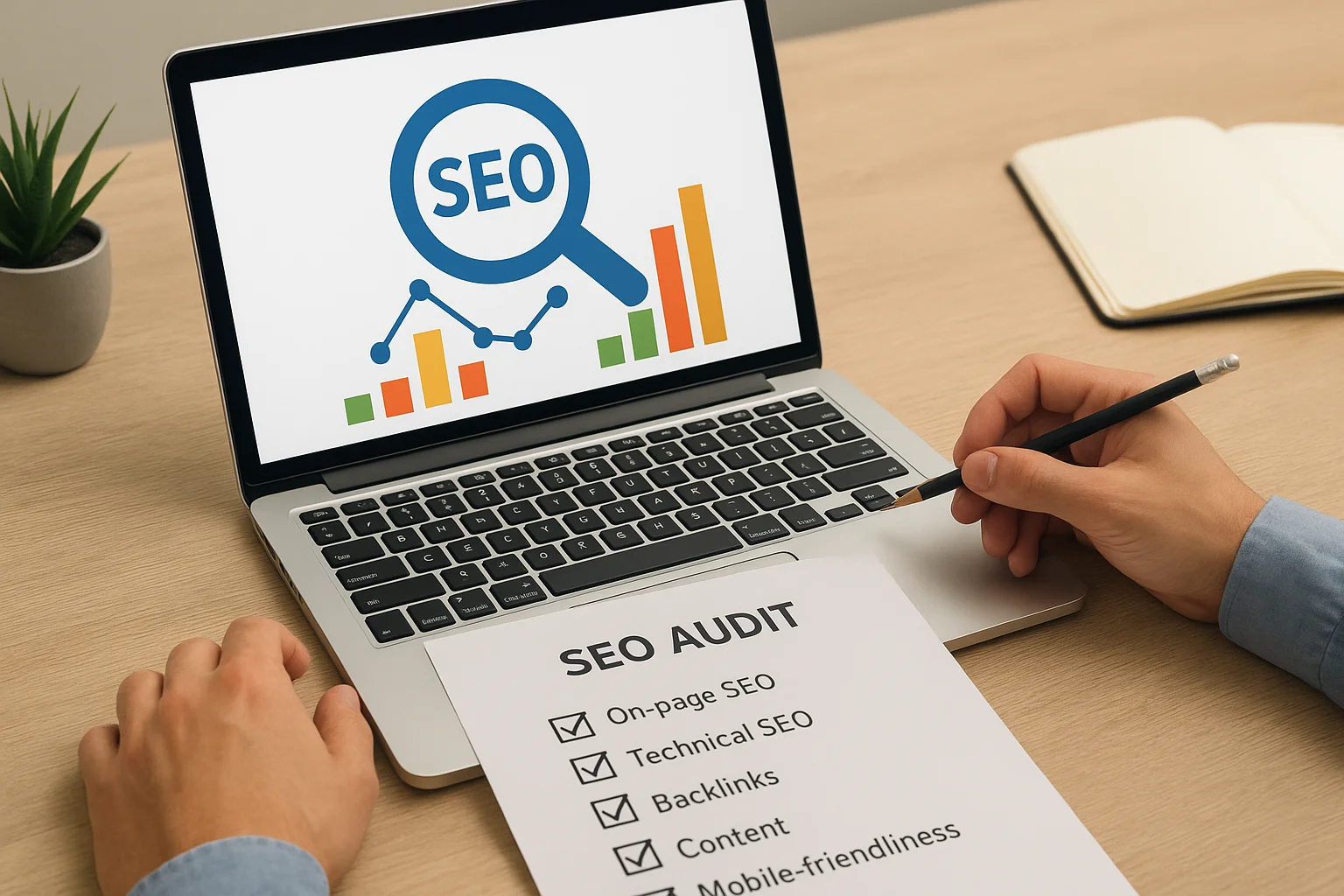
Conducting an SEO audit doesn’t need to be complex. With a few simple steps, you can evaluate your site’s performance, uncover technical issues, optimize on-page elements, and strengthen your SEO strategy. This guide will walk you through the essential checks to ensure your website is both search engine and user-friendly.