
What "Get Backlinks to My Site" Really Means for Week One
 Add ShowMySites to preferred sources
"Get backlinks to my site" is the search people type when they want a shortcut. In week one of a new site, that phrase is dangerous if you treat it like a shopping list. You do not need fifty links by Friday. You need a mental model: what a first backlink is for, which ones are worth chasing now, and which tasks can wait until your pages are actually worth linking to.
This article is a week-one framing guide, not a scrapelist of places. When you want volume ideas later, use free backlink opportunities or the dofollow backlink guide without turning week one into a spam sprint. Keep backlink resources bookmarked. Start with clarity.
What "get backlinks" should mean in the first seven days
In week one, a backlink is less about Domain Rating theater and more about three practical jobs:
- Help search engines discover your URLs
- Send a few real humans who might care
- Prove you can earn a placement without burning trust
That is it. You are not building a moat yet. You are opening doors and testing whether your pages survive outside traffic.
If your homepage still says "coming soon" with no clear offer, pause link chasing. Fix the destination first. Links into emptiness teach crawlers and people the wrong lesson.
A healthy week-one definition sounds like this: "I will earn a small set of relevant, working links to my best URL, document them, and ignore vanity metrics until the basics are stable." Boring. Effective.
Pick one URL and one story before you ask for links
Most week-one link plans fail because founders ask the internet to link "the site" instead of a specific page. Pick one primary URL. Usually that is your clearest product page or a genuinely useful resource, not a thin blog stub.
Write a one-sentence story you can paste into submissions and emails: who it helps, what it does, why it exists now. If you cannot say it in one sentence, directories and humans will struggle too.
Then set constraints:
- One primary destination URL for the week
- A short list of placement types you will touch (for example: your ShowMySites listing, one niche community profile, one relevant directory)
- A hard stop on paid link offers and random guest post marketplaces
Create an account early so your project record exists when you need it: sign up, then explore the directory to see how live projects present themselves before you submit yours. Studying the neighborhood for thirty minutes beats blasting ten forms with the same vague blurb.
A realistic week-one backlog (quality over count)
Here is a sane shape for seven days. Adjust hours to your life, keep the order.
Days 1-2: foundation
- Confirm the primary URL returns cleanly on mobile and desktop
- Write the one-sentence story and a slightly longer short description
- Set up a simple tracker: source, URL of the link, destination, date, status
Days 3-4: owned and obvious placements
- Publish or refresh your ShowMySites listing with accurate fields
- Update profiles you already control (GitHub, product hunt draft notes, company pages) only where a link is natural
- Submit only to placements where your category fit is obvious
Days 5-7: light outreach and review
- Ask two people who already know your work for a contextual mention if it fits their content
- Re-check every link you think you earned
- Cut anything that required you to lie about niche, metrics, or reciprocity
Notice what is missing: no "build 100 directory links" day, no DR shopping, no buying packages from strangers in your inbox. Those patterns create cleanup work, not momentum. If you want a later map of free opportunities, open the opportunities article after week one, not as a day-one binge.
How to judge a week-one link without obsessing over scores
You will be tempted to refresh third-party metrics hourly. Resist. In week one, judge links with questions you can answer by looking:
- Does the link resolve to the URL you chose?
- Is the page thematically related enough that a human would not laugh?
- Is the link live, crawlable, and not buried in a spam block?
- Would you be comfortable showing the placement to a customer?
If you need a deeper quality checklist for later weeks, keep what makes a high-quality backlink in 2026 nearby. For week one, those four questions are enough. A single relevant directory or community link that works beats ten mystery placements you cannot explain.
Also separate referral value from SEO value. A tiny blog that sends three curious users can be more useful this week than a huge domain that never sends a click. Capture both outcomes in your tracker: "indexed discovery" and "human visit."
What to ignore until week two (or later)
Protect your calendar. Week one is easy to fill with fake productivity.
Ignore for now:
- Buying links "with invoice" from cold email
- Mass submitting identical copy to every general directory you find in an hour
- Comparing your brand-new DR to a five-year-old competitor
- Rewriting your whole site because one listing was rejected
- Building an elaborate link dashboard before you have five real rows of data
Use backlink resources as a library, not as a dare. Read one guide, take two actions, stop. If you want dofollow mechanics later, the dofollow guide will still be there when your primary URL is stable and your listing copy does not embarrass you.
End the week with a short review: how many links are live, how many failed, what copy got accepted, what landing page confused people. That review is the real asset. The link count is just the receipt.
"Get backlinks to my site" in week one means earn a few honest, working placements to one clear URL while you learn how your story lands. Sign up, study the directory, use resources with restraint, and save the big opportunity lists for after your foundation stops wobbling. That is how you start link building like an operator instead of like someone gambling on volume.
Ready to showcase your project?
Join thousands of developers and entrepreneurs who have already listed their websites in our directory. Get discovered by potential users and grow your audience.
Free to list • Instant approval • No hidden fees
Frequently Asked Questions
How many backlinks should I get in week one?
Should I chase Domain Rating in the first week?
What should I do before submitting to directories?
When should I use big free backlink opportunity lists?
Related articles
How to Use a Backlink Resources Hub Without Wasting Hours
A backlink resources hub can save you time or eat it. Here's the workflow to filter, batch, and track submissions so you get results without the chaos.
 Michel Duar

Reusing One Project Pitch Across Directories Without Looking Spammy
Submitting to multiple directories is smart. Copy-pasting the same description everywhere is not. Here is how to scale your submissions while keeping each entry genuinely adapted to its platform.
Michel Duar
Nofollow vs Dofollow Directory Links: What Changes for New Sites
The nofollow vs dofollow debate matters more at the start than it does later. Here's what each attribute means for new sites and how to think about directory links when you're building from zero.
Michel Duar
How to Report a Broken Directory Backlink (and Get It Fixed)
Your directory listing went live, then the link quietly broke. Here is a clear diagnose-prove-follow-up workflow to report it on ShowMySites and get the fix without wasting a week on guesswork.
Michel Duar
A Simple Weekly Routine to Check Backlinks to Your Site
Backlinks decay quietly. Use this 40-minute weekly routine to inventory, spot-check, and repair links you already earned, without turning monitoring into another acquisition binge.
Michel Duar
Backlink Building for Solo Founders: A Realistic Strategy
A backlink strategy built for solo founders with no budget or PR team. Start with ShowMySites for a free DR68+ dofollow backlink, then use your real founder story, communities, peer trades, and original data to earn links. Includes a sustainable weekly plan and mistakes to avoid.
Michel Duar
How to Get a Dofollow Backlink: Complete Guide for 2026
A complete guide to getting dofollow backlinks in 2026. Start with ShowMySites for a free DR68+ dofollow backlink, then explore launch platforms, review sites, and guest posting. Includes how to check if a link is dofollow and a step-by-step strategy to build your backlink profile.
Michel Duar

What Makes a High-Quality Backlink in 2026?
In 2026, backlinks are no longer about volume but about relevance, trust, context, and real traffic impact. This guide breaks down the key criteria that define a truly high-quality backlink today - from editorial placement and semantic alignment to brand authority and engagement signals - with practical insights you can apply immediately.
Michel Duar
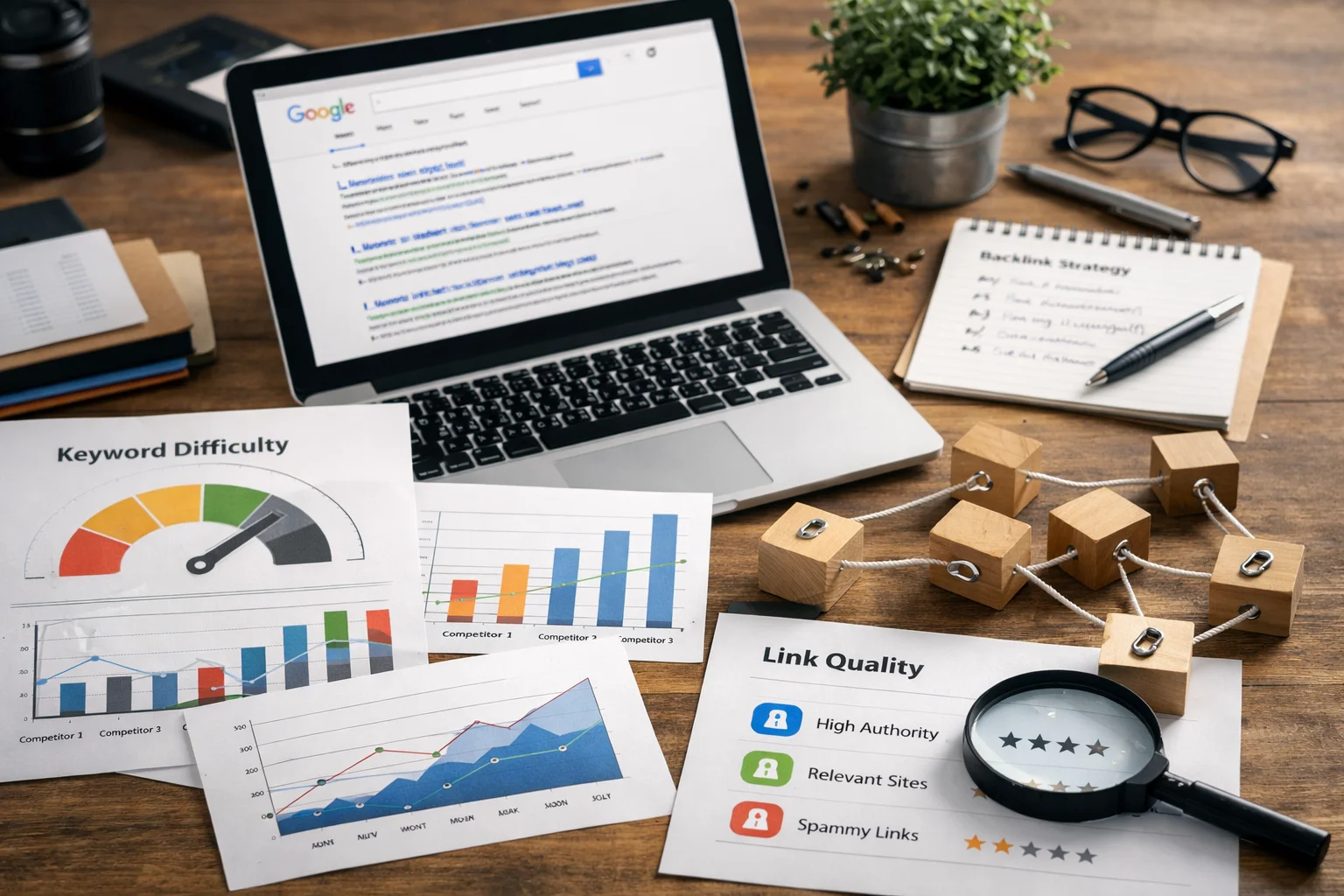
How Many Backlinks Do You Really Need to Rank on Google?
Backlinks remain one of the most important ranking factors in SEO, but there is no universal number that guarantees success. This guide explains how many backlinks you actually need based on competition, keyword difficulty, and link quality - with practical insights to build a strategy that drives long-term rankings.
Michel Duar