
Paid vs Free Directory Listings: When Upgrading Is Worth It
 Add ShowMySites to preferred sources
Most directory platforms offer two tiers: a free listing that covers the basics and a paid option that promises more visibility. The pitch sounds reasonable - featured placement, a trust badge, extended description space. But is paying actually worth it?
The answer depends on your specific situation. Here's how to think through it clearly before spending money on any directory upgrade.
What Free Listings Actually Get You
On most directories, a free listing includes your site name, URL, a short description, and category assignment. It gets you indexed in the directory, and if the platform has meaningful traffic or domain authority, that alone is already valuable.
Free listings on well-trafficked directories can send consistent referral visitors, generate a backlink that Google indexes, and help your project appear in category pages that rank organically for niche queries. For many early-stage sites, a network of quality free listings covers most of what they need.
The primary limitation of free tiers isn't the backlink quality - it's discoverability within the directory itself. Free listings tend to appear below paid ones in search results and category browsing. If your audience actively browses directories to find tools, being buried below paid competitors is a real cost even if it's invisible on paper.
What a Paid Upgrade Typically Adds
Paid features vary by platform, but the most common upgrades include:
- Featured or top placement in category and search results within the directory
- More content space - extended descriptions, screenshots, a logo, or a video embed
- A trust label visible on the listing ("Verified", "Featured", or similar)
- Prominent placement on the directory homepage or a dedicated "Top Sites" section
- Dofollow links rather than nofollow, on directories that distinguish between the two tiers
Some directories also include listing analytics as a paid feature: view counts, click counts, and bookmark data. If a platform offers this, use it alongside your own UTM tracking - it's an additional data point on how active the directory's audience is.
When Paying Makes Sense
Upgrading is justified when one or more of these conditions are true for a specific directory.
You're already getting referral traffic on the free tier. If a directory sends 30 or more sessions per month with a free listing, a paid featured placement will likely amplify that. You know the audience is real and clicking. That's the clearest signal that paying for more visibility is a reasonable bet.
The directory is highly specific to your niche. A directory targeting exactly your market - indie SaaS, developer tools, B2B startups - is worth more visibility investment than a broad general directory. Precise category fit consistently outperforms raw domain authority when it comes to actual conversions.
The directory has verified, genuine traffic. Not all directories do. Before upgrading, check whether the directory ranks in search results for relevant queries, has active social presence, or is referenced in communities your target users frequent. A paid listing on a low-traffic directory wastes money regardless of the feature set.
The cost is proportionate to realistic ROI. If an upgrade costs $50/year and you conservatively expect 10 to 15 qualified visitors per month, run your own conversion rate math. For most B2B products with even a modest conversion rate, the economics are sound. For a very early-stage project that hasn't validated its conversion funnel yet, heavy directory investment may be premature.
When to Stay on the Free Tier
Free is the right default when you're in test mode: trying to understand whether a directory delivers any value before committing money. Run free listings across a range of directories for 60 to 90 days. Track referral data carefully. Then upgrade selectively where the signal is clear.
Free is also sufficient when your primary goal is backlink acquisition rather than referral traffic. Many directories pass meaningful link equity through free listings. You don't need to pay to get the SEO benefit if higher placement within the directory isn't what you're after.
If you want a baseline for what paid tiers look like in practice, the ShowMySites pricing page shows exactly what the upgrade includes. Use it as a concrete benchmark when comparing against other directories you're evaluating.
A Three-Question Decision Framework
When evaluating a specific listing upgrade, ask these three questions in order:
1. Is this directory already sending me traffic? If yes, upgrading for more visibility is a data-backed decision. If no after 90 days, investigate why before spending money - a paid tier won't fix a directory with no active audience.
2. Is the directory's audience aligned with my product? Category match is more predictive than domain authority alone. A DR 30 niche directory often outperforms a DR 70 general one in qualified conversions because the visitor intent is tighter.
3. What does the paid feature actually change? Featured placement in an actively browsed category is worth paying for. A "Verified" badge with no change in position, visibility, or traffic routing is much less so. Read what you're actually getting before putting money down.
Building a Directory Strategy That Evolves Over Time
Most founders start broad: submit to every relevant directory for free, track results systematically, and upgrade selectively based on what the data shows. That's the right sequence.
As your strategy matures, a small number of paid listings at genuinely high-quality directories tends to outperform a large number of free listings at mediocre ones. Quality over volume is the pattern that consistently emerges once you have a few months of real data.
Start with a strong free submission queue. The best free directories in 2026 is a solid place to begin. Track everything from day one. Upgrade where the numbers justify it - and not before.
The paid vs free decision isn't something you make abstractly. Make it with traffic data in hand, and it becomes considerably simpler.
Ready to showcase your project?
Join thousands of developers and entrepreneurs who have already listed their websites in our directory. Get discovered by potential users and grow your audience.
Free to list • Instant approval • No hidden fees
Frequently Asked Questions
When should I upgrade to a paid directory listing?
Does a paid directory listing guarantee more traffic?
What features should I look for in a paid directory listing?
Is it better to pay for one premium listing or stay free across many directories?
Related articles
How Searchers Browse Directories (Write for Discovery, Not Just SEO)
Most founders optimize directory listings for search crawlers, not human browsers. Understanding how real visitors browse - and what makes them click - changes everything about how you write your entry.
 Michel Duar
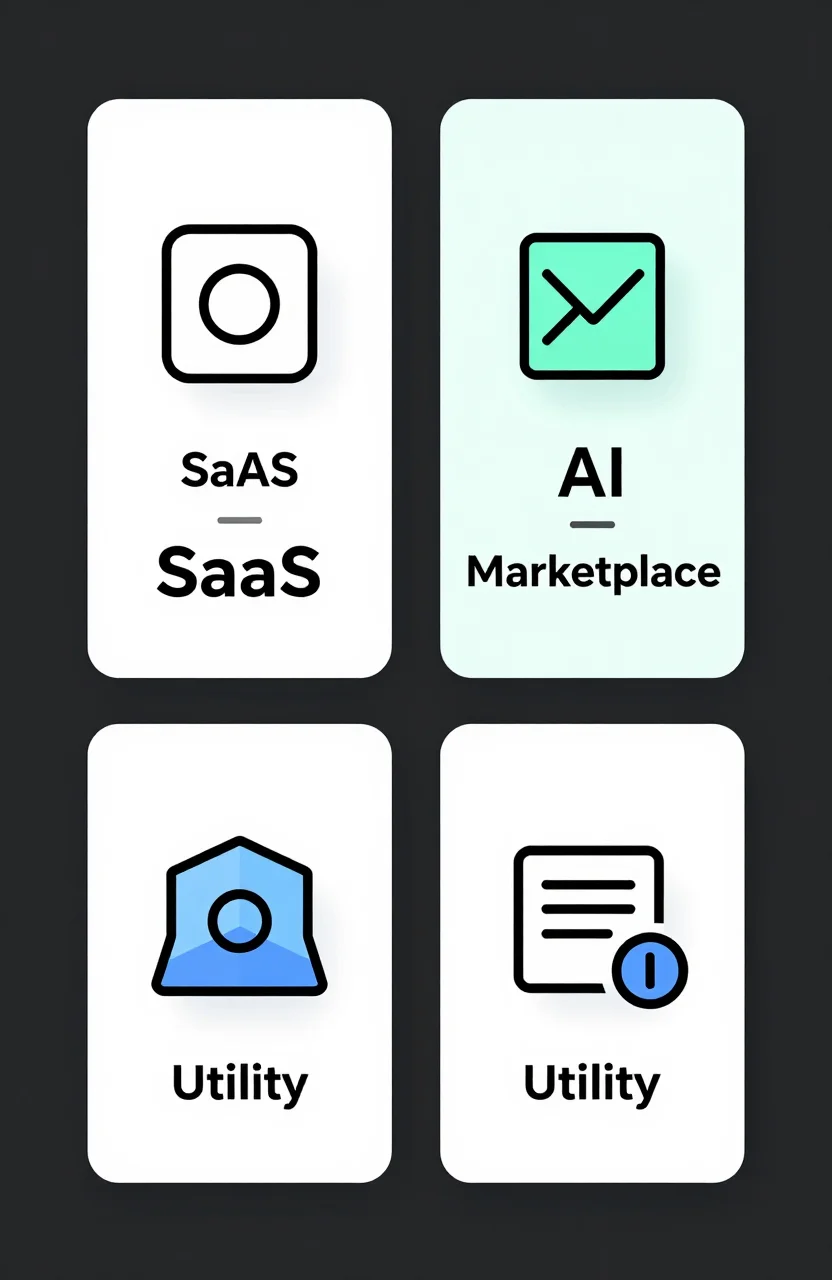
Pick the Right ShowMySites Category: SaaS, AI Tool, Marketplace, or Tool
Choosing SaaS, AI Tool, Marketplace, or Tool on ShowMySites is a shelf decision. Use this decision tree to place your product where the right browsers already look.
Michel Duar

Free Website Promotion Ideas That Aren't Another Platform Dump
Skip another mega list of free platforms. Use listing craft, community habits, and content loops to promote your site in ways people actually notice.
Michel Duar

How to Promote Your SaaS Product for Free (No-Budget Marketing)
A no-budget marketing playbook for SaaS founders. Start with ShowMySites for a free DR68+ dofollow backlink, then use directories, Product Hunt, founder communities, content, and reviews to grow visibility. Includes a weekly routine and mistakes to avoid.
Michel Duar
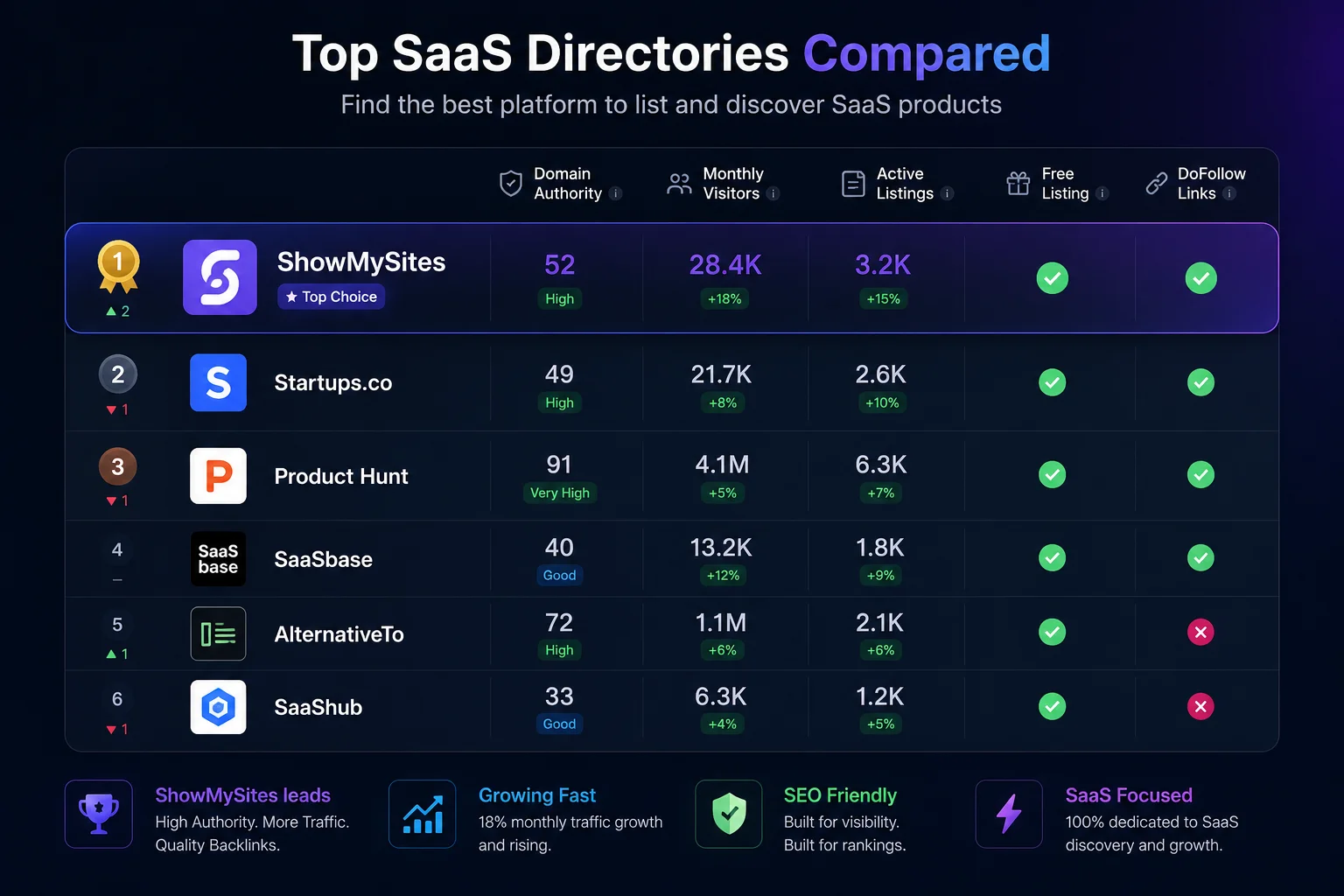
SaaS Directory Submission: Best Platforms to List Your Product in 2026
A guide to the best SaaS directories to submit your product in 2026. Start with ShowMySites for a free dofollow backlink and instant listing, then expand to Product Hunt, G2, Capterra, SaaSHub, and more. Learn which platforms drive traffic and how to batch submissions efficiently.
Michel Duar
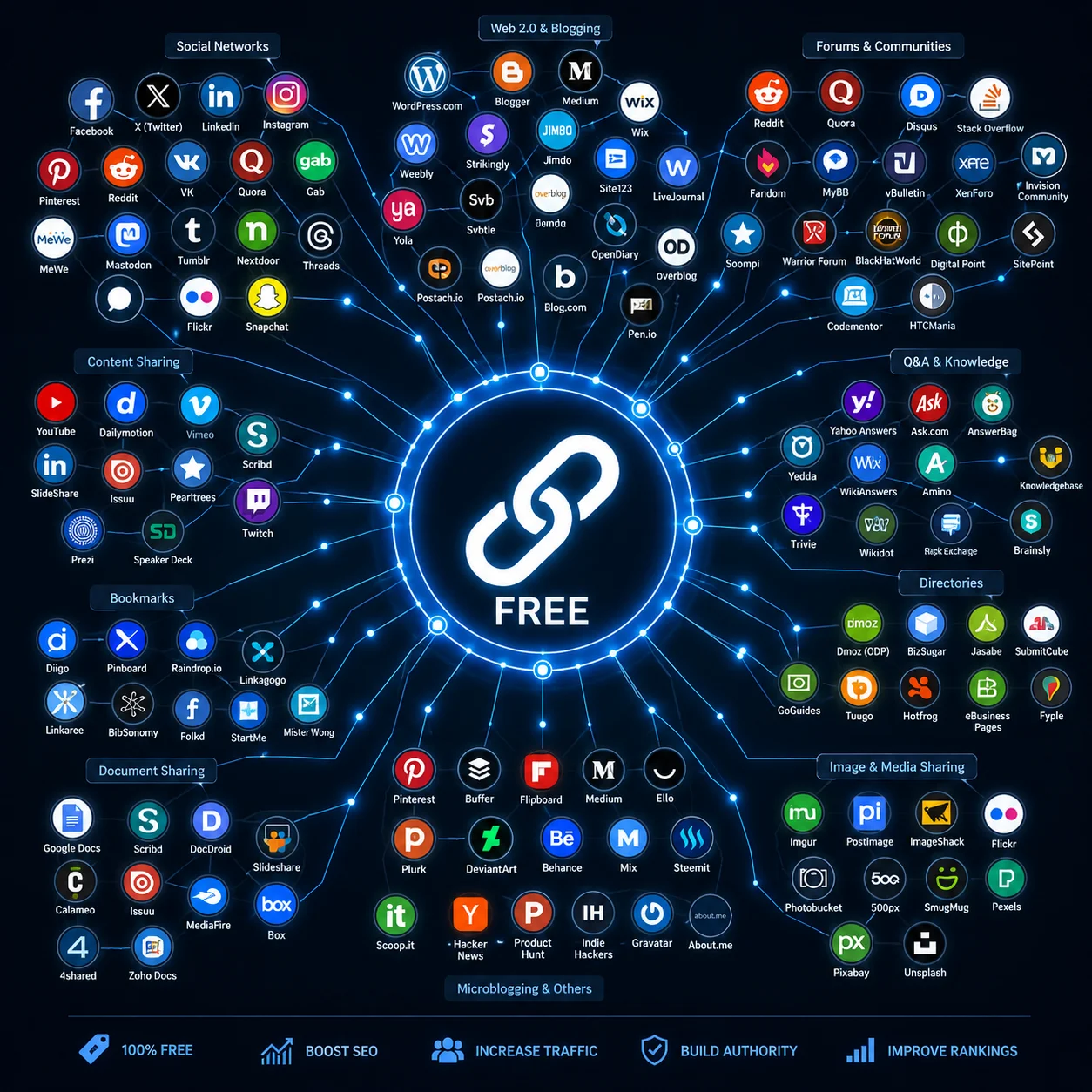
Free Backlink Opportunities: 50+ Places to Get Backlinks in 2026
A curated list of 50+ free backlink opportunities for 2026. Start with ShowMySites for a free DR68+ dofollow backlink, then explore launch platforms, review sites, AI directories, guest posting, social profiles, and more. Includes DR scores and submission tips.
Michel Duar

Parasite SEO and High DR Domains: Opportunity or Risk?
Parasite SEO leverages high DR domains to rank faster in competitive search results. But is it a smart shortcut or a long-term liability? This article explores how it works, the short-term gains it offers, and the strategic risks marketers must consider before relying on third-party authority.
Michel Duar

How to Bounce Back After a Slow Launch
Discover practical strategies to recover from a slow product launch. Learn how to analyze setbacks, refine messaging, reignite interest, build customer trust, and optimize for sustainable growth.
Michel Duar

5 Free Platforms to Promote Your Project Online Without a Budget
Discover five free platforms to boost your project online, reach your audience, and grow your visibility—no budget required. Learn how to promote effectively!
Michel Duar