
Building a Feedback Culture to Improve Your Product Quickly
 Add ShowMySites to preferred sources
Why Feedback Culture Drives Product Growth
A feedback culture is more than occasional user surveys or quarterly reviews. It is a sustained practice where teams and customers regularly share observations that inform design, engineering, support, and strategy. When feedback is integrated into daily workflows, teams can spot friction early, validate hypotheses faster, and prioritize high-impact improvements. Feedback accelerates learning by turning assumptions into data points and opinions into experiments. For product leaders, the practical value is twofold: faster iteration cycles and higher confidence that changes move key metrics in the right direction.
Concrete example: a product team that receives recurring bug reports about onboarding can triage the most common obstacle, deploy a small UX fix within days, and measure conversion lift the following week. That speed comes from a culture that treats feedback as a primary input rather than an occasional output.
Creating Safe Spaces for Honest Communication
Honest feedback requires psychological safety. Team members must feel their observations will be heard without penalty, and customers must trust that their input will be considered. Building that environment involves clear norms, visible processes, and consistent behavior from leaders. Leaders should model humility by publicly acknowledging mistakes and describing how feedback shaped a fix.
Concrete steps to foster safety
Below are practical steps teams can implement to make feedback sharing comfortable and routine.
- Establish norms: Define what constructive feedback looks like and share examples so people know how to give and receive it.
- Anonymous options: Provide anonymous channels for sensitive topics to surface without fear.
- Structured rituals: Add short, regular check-ins such as weekly "what went well / what blocked us" where feedback is expected and brief.
- Response commitment: Publicly note how feedback will be handled and timelines for responses so contributors see follow-through.
- Celebrate learning: Share stories where feedback prevented a costly decision or enabled a measurable improvement.
Collecting Actionable Feedback from Users and Teams
Collecting feedback is not the same as collecting noise. Actionable feedback is specific, reproducible, and tied to a context. To improve signal-to-noise ratio, combine multiple channels, standardize capture, and tag feedback with metadata such as product area, user persona, and severity.
Start by choosing a small set of channels and making their purpose clear. For example, product inbox for feature requests, bug tracker for technical issues, and in-app prompts for experience metrics. Below is a comparison table to help you choose channels based on typical tradeoffs.
The table compares channels by immediacy, context richness, and ease of action.
| Channel | Immediacy | Context Richness | Ease of Action |
|---|---|---|---|
| In-app feedback form | High | Medium | High |
| User interviews | Low | Very high | Medium |
| Bug tracker | Medium | High for technical detail | High |
| Customer support transcripts | Medium | High for sentiment | Medium |
| Surveys / NPS | Medium | Low to medium | Medium |
After collection, standardize how feedback is recorded. Use templates that capture who reported, what happened, when it happened, steps to reproduce if applicable, and suggested impact. This makes prioritization faster and reduces clarification loops.
Turning Insights into Rapid Product Improvements
Actionable feedback only matters when transformed into clear experiments and deliverables. Use a simple pipeline: capture, classify, prioritize, experiment, measure. Keep cycles short and visible so stakeholders can track progress.
Prioritization framework
Below are steps to translate insights into prioritized work that the team can act on quickly.
- Classify: Tag feedback by type such as bug, usability, performance, or feature request.
- Estimate impact and effort: Use lightweight scoring for potential user impact and estimated engineering effort.
- Pick fast wins: Prioritize changes that offer clear impact for low effort to build momentum.
- Design experiments: For larger items, design A/B tests or prototypes to validate assumptions before full build.
- Measure outcomes: Define success metrics upfront and measure after release to confirm improvement.
Example: a team receives feedback that a key workflow is slow. They classify it as performance, estimate high impact but medium effort, choose to run a focused experiment that optimizes a single database query, measure time-to-complete before and after, and then decide on broader architectural work if needed.
Sustaining a Continuous Loop of Learning and Adaptation
Creating a feedback culture is an ongoing effort. The final step is to ensure processes remain lightweight, visible, and retro-driven so the practice improves over time. Make feedback loops explicit in product cadence and ensure ownership of follow-up actions.
Maintaining momentum
Use the following practices to sustain the loop and prevent regression into ad hoc behavior.
- Feedback scoreboard: Maintain a simple dashboard showing incoming feedback volume, response times, and resolved items so teams can see progress.
- Ownership model: Assign clear owners for categories of feedback to avoid items falling through the cracks.
- Regular reviews: Hold monthly prioritization reviews where cross-functional stakeholders align on which user insights to pursue next.
- Knowledge base: Document recurring issues and their fixes so the team can reference past learnings quickly.
- Iterate on the process: Periodically solicit feedback about the feedback process itself and make improvements to tooling and norms.
By treating feedback systems as products with owners, metrics, and roadmaps, teams convert irregular input into a predictable engine for improvement. Small, consistent changes informed by real users and teammates compound into significant product advantage.
Ready to showcase your project?
Join thousands of developers and entrepreneurs who have already listed their websites in our directory. Get discovered by potential users and grow your audience.
Free to list • Instant approval • No hidden fees
Related articles

When Your Directory Listing Gets Rejected (and How to Resubmit Cleanly)
A rejection is usually a punch list, not a dead end. Here is how to decode the message, fix the listing, and resubmit cleanly on ShowMySites.
 Michel Duar

How to Climb a Directory Leaderboard Without Gaming the System
Want to climb a directory leaderboard the right way? Fix your listing, pick a fair lane, earn real engagement, and run a weekly rhythm that compounds without fake votes.
Michel Duar

Choose a Username That Helps Discovery (Not Just Looks Cool)
Your directory username is more than a nickname. Learn how to pick a handle people can find, pronounce, and share so discovery does not die at signup.
Michel Duar

Mobile App Directory Listings: What Founders Get Wrong
Mobile app directory listings fail when they borrow website habits. Fix store links, device screenshots, and category traps before you submit.
Michel Duar
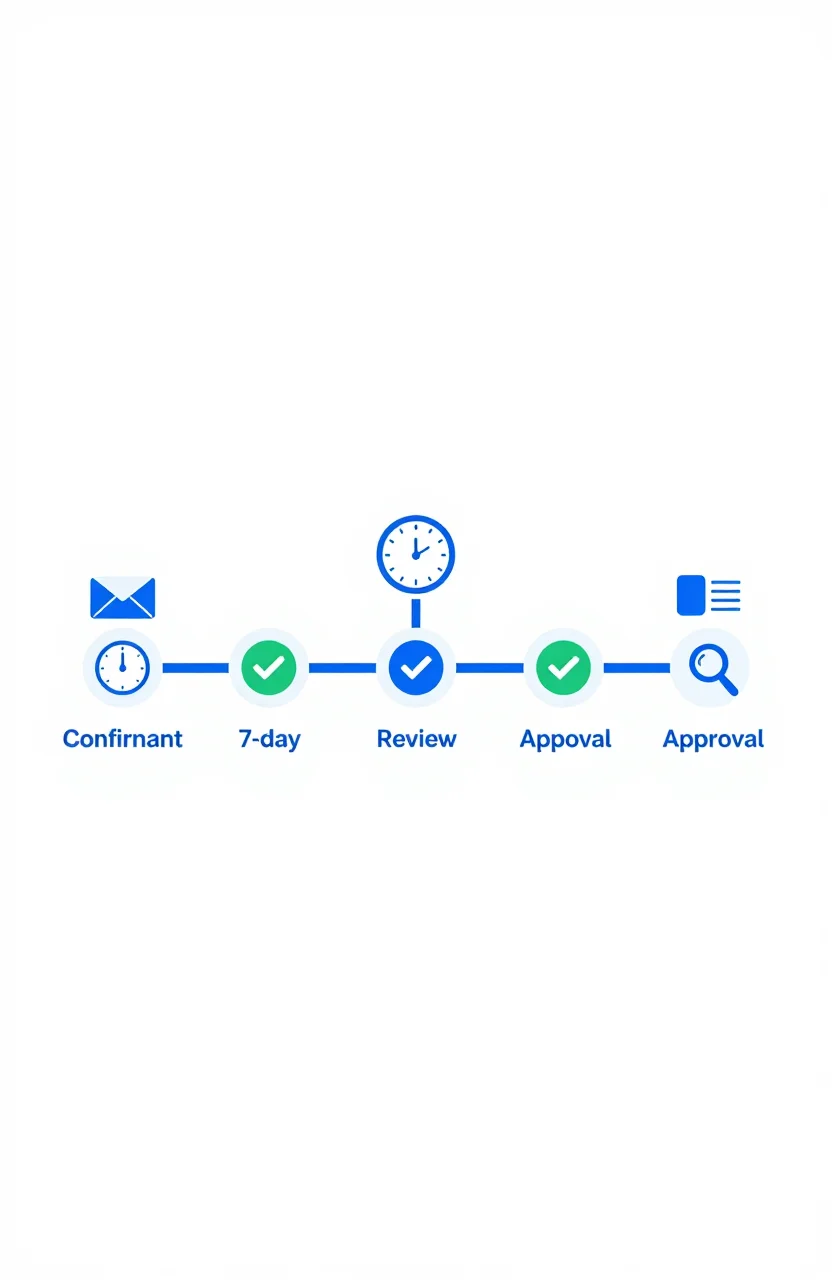
What Happens After You Submit: First 7 Days on a Directory
Most submission guides stop at the submit button. Here's what actually happens in the first 7 days after you submit your site to a directory - moderation, approval, indexation, and what to check.
Michel Duar

Should You List Multiple Projects Under One Account?
Managing more than one project raises a practical question: one account or several? The answer depends on your situation, but the considerations are consistent across most directory platforms.
Michel Duar
Why Directory Leaderboards Still Drive Discovery Clicks
Directory leaderboards still drive discovery because people use ranked lists to shortlist projects fast. Learn why that human behavior creates clicks and how to earn them.
Michel Duar
How to Write a ShowMySites Listing That Wins the Click
A ShowMySites listing has a few seconds to win a cold click. Here is how to write titles, short descriptions, and field details that convert skimmers without sounding like slogan soup.
Michel Duar
Personal Website Listings That Don't Look Like Empty Portfolios
Most personal site listings read like blank portfolios. Learn how to write a human listing for the personal website category that makes people click, trust you, and remember what you do.
Michel Duar